
Outbound
Your operations end here. We take into account the number of journeys per day, the charging method, and the space available at your docks, and recommend equipment suitable for these requirements.
The starting point of your logistics processes
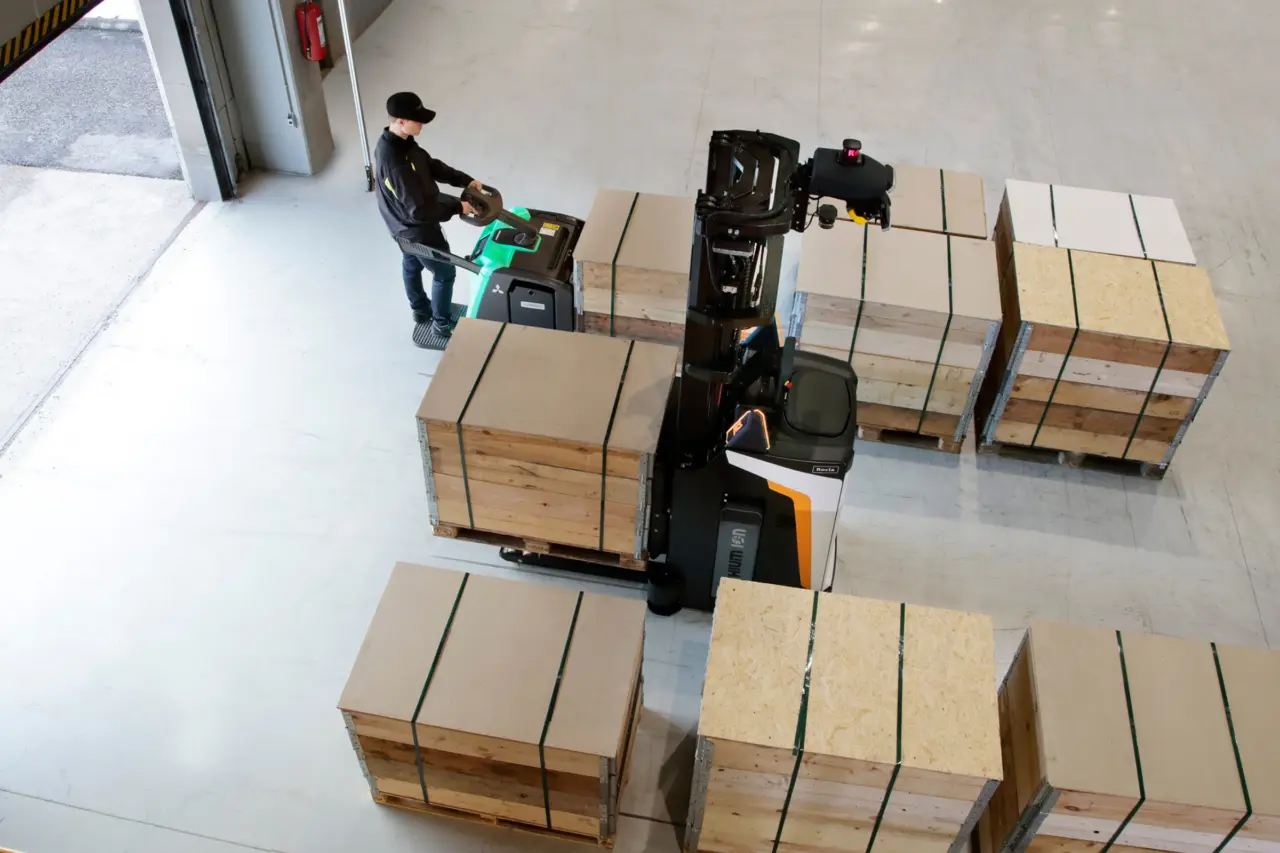
Outbound is the final stage of your logistics process: orders are picked, checked, prepared and loaded. Anything that goes wrong here leaves the premises. A pallet that’s ready too late holds up a lorry, and your customer will notice any error in the loading sequence.
At Logisnext, we help your business streamline your outbound operations. From automation to forklifts and storage solutions, complemented by warehouse fittings, material handling equipment, life cycle services, hire and software solutions, we look at your order volume, your space at the dock and your transport planning, and determine which solution will make your dispatch operations easier to manage.
Sometimes, a more streamlined zoning system is more effective than an extra lorry.
In some cases, a mixed fleet approach can be the most effective solution for outbound operations. AGVs handle repetitive load transfers between storage and dispatch areas, while reach truck drivers provide the flexibility needed to manage changing priorities and peak workloads. Supported by FleetController’s automated material flow control, tasks can be dynamically distributed between manual and automated equipment, improving material flow, reducing order fulfilment lead times, and maximising overall operational efficiency.
Suitable vehicles for outbound operations
Automated Compact Truck (ACT)
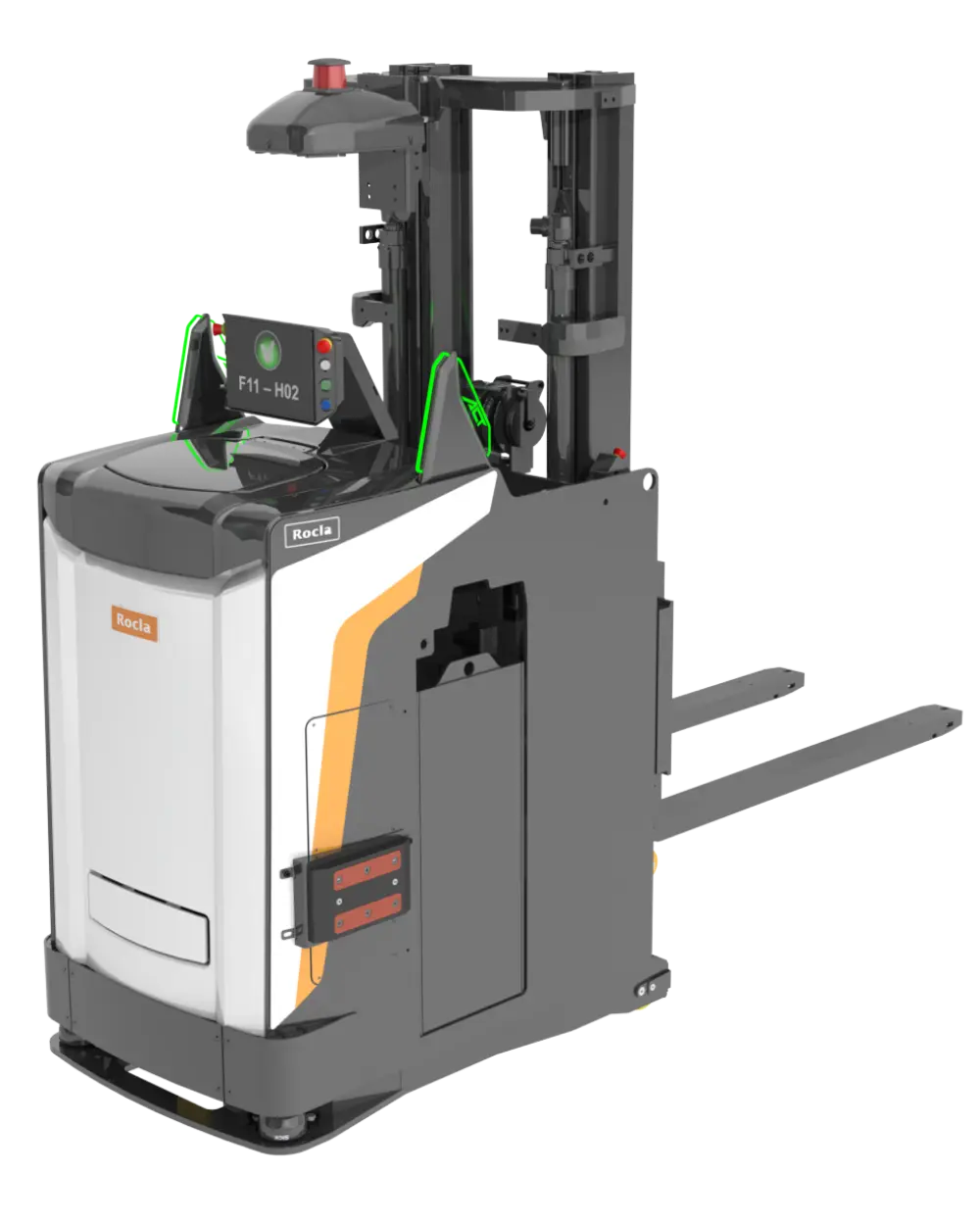
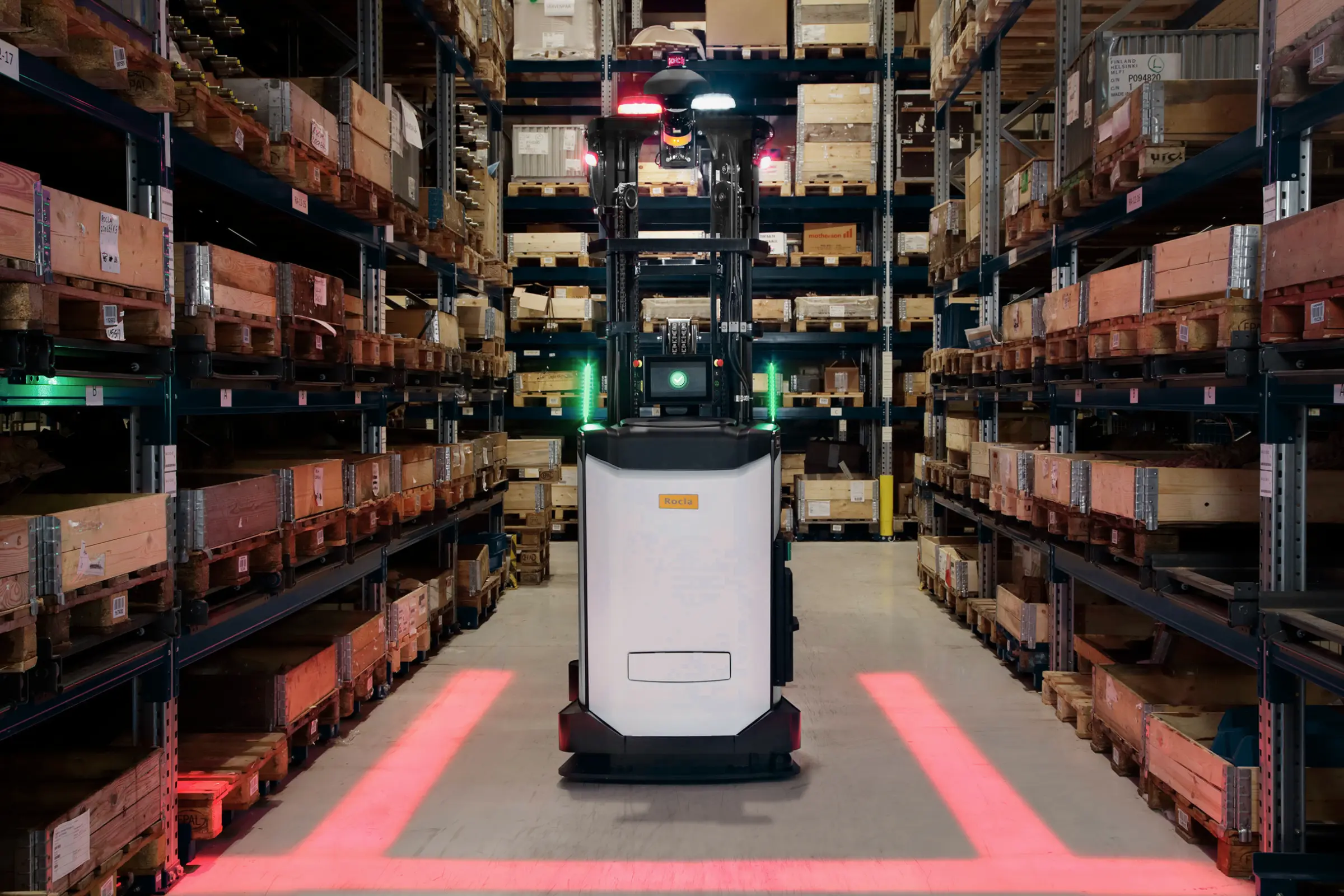
The Automated Compact Truck (ACT) is ideal for heavy-duty lifting in narrow spaces. With a strong hydraulic unit, ACT can lift heavy loads up to 6 m in aisles as narrow as 2.6 m. ACT is developed with optimal automation in mind. This means harmonious interaction between AGVs and manual operations, with all systems seamlessly communicating and sharing tasks.The vehicle's touchscreen is highly responsive, with fast haptics and excellent visibility from different angles. With instructive colour-coded information, the information is conveyed quickly and clearly. LED fins on both sides of the vehicle serve as turn signals and indicate the state of ACT from a distance, improving communication with warehouse personnel.ACT meets the ISO 3691-4 safety standard requirement. It has comprehensive safety features like 360° safety fields and side clearance monitoring. By signalling its status with lights and sound, ACT makes the warehouse work safer and more efficient. Proximity detection allows AGVs, forklifts and people with tags to detect each other without a direct line of sight, slowing the vehicle down and stopping if necessary.ACT is the winner of the iF Design Award 2024, the Red Dot Design Award 2024 and the Automation Product Innovation of the Year Archie's Award 2024.
- Available as forkover and counterbalance
- Lifting up to 6 m
- Can operate in 2.6 m-wide aisles
- Fits in existing warehouse logistics
- Responsive user interface
- Designed to collaborate with manual operations
One last push
The importance of the last step
All the previous steps come together in the dispatch area. If stock has been replenished too late, an item will be missing. If items have been labelled unclearly, the wrong pallet will be dispatched. If the area is too small, orders for different deliveries will be mixed up.
That is why we look not just at the loading stage, but at the entire route: from the picking location to the loading bay. How many journeys set off each day? What is the latest time by which an order must be complete? And how much capacity do you have to buffer orders per journey?
Common issues
With outbound deliveries, you’re almost always racing against the clock and it’s crucial your warehouse’s schdule is aligned with departure times. Save time by identifying these issues in advance.
- Not enough buffer space to prepare orders per journey
- Orders for different journeys that are jumbled up
- Loading work that only begins once the lorry is already there
- Peaks at the end of the day
- Uncertainty as to which pallets have already been checked
- Loading and replenishment operations involving the same equipment
- Damage caused during loading or whilst manoeuvring at the dock
- No idea what still needs to be done before the next journey
From picking bay to lorry
Outbound consists of a few clear steps. The more seamlessly they flow into one another, the less you’ll have to sort out at the last minute.
Storage is key for efficient operations
It is often overlooked that having the right type of storage can help speed up the process and keep your operations running smoothly. At Logisnext, we look at your entire operation to advise you on the most efficient solution, including racking or other material handling equipment such as conveyors.
Preparing and setting out
Orders come in from different parts of your warehouse. The sooner you group them by trip, the less time you’ll spend searching for them later. In practice, having a fixed location for each trip or at each dock works better than a single large communal area. Here, automation might help free the human workforce to take care of tasks that require critical thinking or human skills, such as following steps.
Inspection and labelling
Before a pallet is loaded onto the lorry, it must be established that it is complete and correct. A designated inspection point and a clearly visible status indicator prevent a pallet from being checked twice or not at all.
Loading
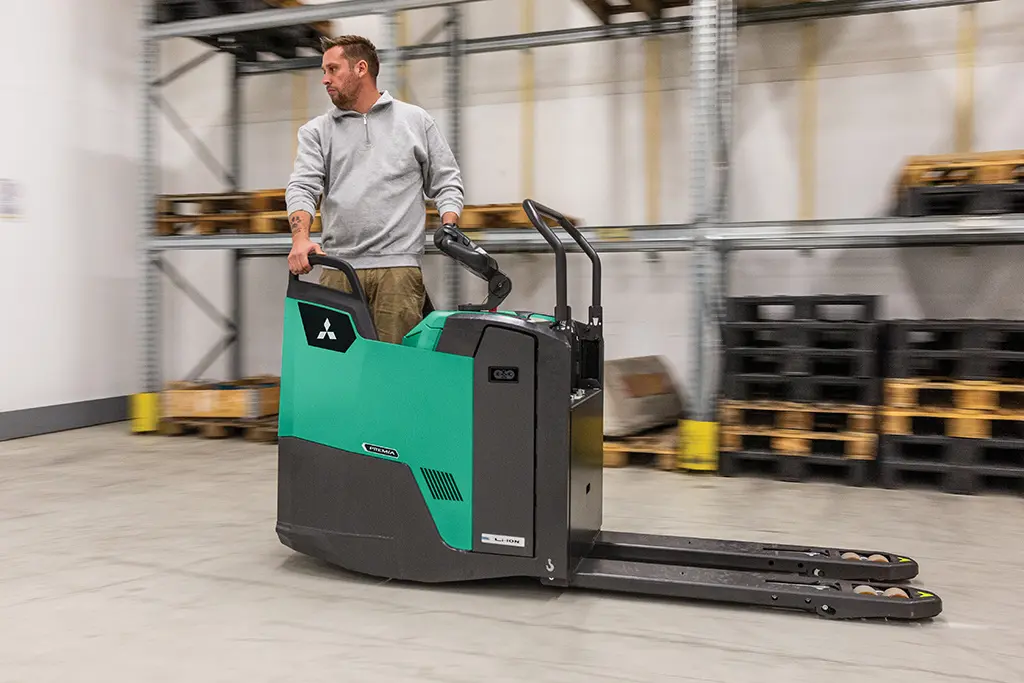
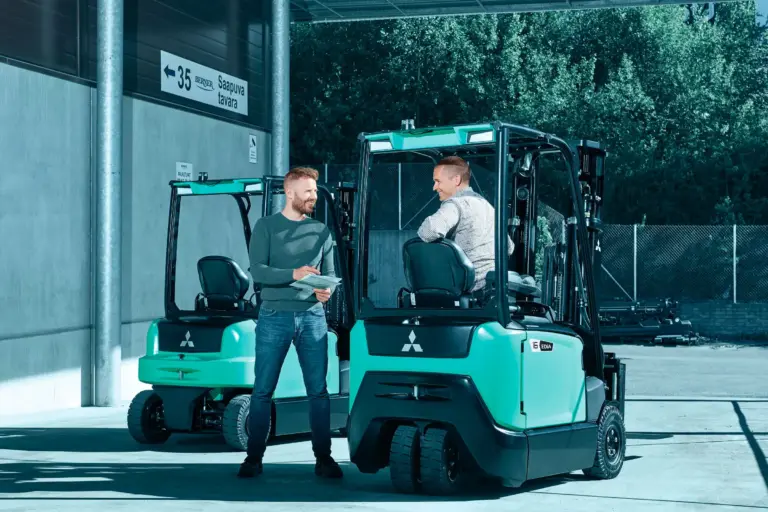
Loading is all about speed and order. Whatever is loaded last is the first thing to be unloaded at the customer’s premises. For pallets in the trailer, an electric pallet truck is often the quickest option; for heavier or irregular loads, a forklift or is required.
Cross-docking
If a consignment goes straight from incoming to outgoing, you can skip the storage stage altogether. This requires space between the docks and clear arrangements, but it saves two movements per pallet.
Complete your solution

Ready to make your expedition run more smoothly?
Do you want journeys to depart on time and orders to be dispatched in full? Our experts are happy to work with you to find a solution.
Together, we’ll look at where your dispatch process could be optimised and which solution best suits your routes, space and equipment.
Contact us today and learn how we can help you elevate your possibilities
Curious to know more?
Call us or send us a message